Aluminum Castings Company LLC – QMS Certified to ISO 9001:2015 & PED 2014 with TUV Rheinland of North America
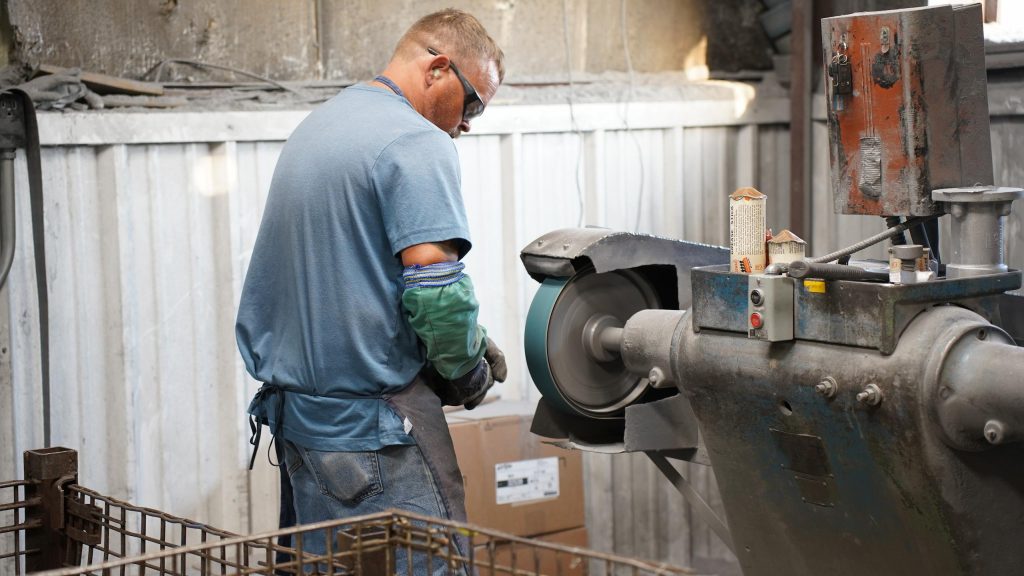
Casting grinding is a critical finishing operation used to refine aluminum castings after solidification and cleaning. Aluminum Castings Company provides controlled casting grinding services designed to remove excess material, improve surface consistency, and prepare castings for machining or final inspection. This process is essential for achieving dimensional accuracy and ensuring cast components meet functional and cosmetic requirements.
Our casting grinding operations are integrated into the broader foundry workflow to maintain consistency and repeatability. Each casting is evaluated to determine the appropriate level of grinding required without compromising structural integrity.
The primary purpose of casting grinding is to remove gates, risers, flash, and surface irregularities left from the molding and pouring process. These features must be removed to meet dimensional requirements and prevent interference during assembly or machining. Controlled grinding ensures castings reflect their true geometry.
Casting grinding serves as a transition between raw castings and precision finishing operations. Performing grinding at the correct stage improves inspection accuracy and machining efficiency. This step helps maintain predictable production flow and quality control.
Different aluminum casting designs require specific grinding approaches to achieve consistent results. Aluminum Castings Company applies controlled grinding techniques based on part geometry, alloy type, and downstream processing needs. Each method is selected to balance material removal with surface preservation.
Grinding is used to remove excess metal formed during the casting process, including gates and risers that supported metal flow. Proper removal prevents interference with part fit and function. This step also improves part appearance and prepares the surface for further finishing.
Grinding refines surface irregularities and sharp edges that may affect handling, machining, or performance. Smoothing these areas improves dimensional consistency and reduces stress concentrations. This is especially important for components subject to load or vibration.
Casting grinding directly affects final part quality, production efficiency, and downstream performance. When performed consistently, it reduces variation and improves manufacturability.
Grinding removes excess material that can interfere with dimensional accuracy. Clean, consistent surfaces allow for more reliable inspection and tolerance verification. This supports predictable machining and assembly outcomes.
Machining castings with uneven surfaces or residual material can increase tool wear and reduce accuracy. Proper grinding prepares castings for machining by providing consistent reference surfaces. This improves machining efficiency and repeatability.
Controlled grinding helps identify defects early and prevents issues from progressing downstream. By delivering properly finished castings, manufacturers reduce rework and scrap. This contributes to stable production schedules and cost control.
Different aluminum alloys respond differently to grinding based on hardness and surface characteristics. Our approach accounts for these differences to ensure effective material removal without damaging the casting.
Some alloys require more controlled grinding to prevent surface tearing or excessive heat buildup. Grinding methods are adjusted to match alloy behavior and performance requirements. This ensures consistent surface quality across production runs.
While grinding removes excess material, it must not alter critical dimensions or weaken load-bearing features. Our processes are designed to preserve structural integrity while achieving required surface conditions. This balance supports long-term component performance.
Properly ground aluminum castings are essential for manufacturers operating in precision-driven and regulated industries. Our casting grinding services support components used in demanding applications.
OEMs rely on consistent grinding to ensure cast components meet fit, function, and assembly requirements. Grinding supports accurate machining and reliable system integration.
Industries with strict quality standards depend on controlled grinding to meet compliance and performance expectations. Proper surface preparation supports inspection accuracy and long-term durability.
Industries served include:
Quality assurance extends through the casting grinding stage to ensure consistency and traceability. Grinding operations are documented and verified as part of the overall production process.
Castings are inspected after grinding to confirm dimensional accuracy and surface condition. This ensures parts are ready for machining or final inspection without additional rework.
Grinding procedures and parameters are documented to maintain repeatability. This supports continuous improvement and compliance with customer requirements.
Manufacturers partner with Aluminum Castings Company because casting grinding is treated as a controlled, value-adding operation rather than a cosmetic step. Our approach supports consistency and downstream success.
Grinding is coordinated with cleaning, machining, and inspection to maintain process continuity. This integration reduces variability and supports predictable outcomes.
Our grinding processes are designed to support machining accuracy, assembly fit, and in-service performance. This ensures castings perform reliably throughout their lifecycle.
If you are seeking dependable casting grinding services as part of a controlled aluminum casting process, Aluminum Castings Company delivers disciplined finishing operations backed by proven quality systems. Contact our team today to discuss your requirements or request a quote.
Grinding and finishing operations in aluminum casting generate dust and airborne particles that must be properly controlled to protect worker health and maintain safe conditions. The ventilation safety standards outlined by OSHA emphasize the use of exhaust systems, hoods, and airflow controls to capture contaminants at the source during grinding processes.
Your engineered aluminum casting solution starts here.
Call: 309-343-8910 | Email: sales@aluminumcastingscorp.com

Aluminum Castings Company LLC – QMS Certified to ISO 9001:2015 & PED 2014 with TUV Rheinland of North America