Aluminum Castings Company LLC – QMS Certified to ISO 9001:2015 & PED 2014 with TUV Rheinland of North America
Marine industry aluminum castings support manufacturers that need lower-weight components with controlled geometry, alloy chemistry, machining, and inspection. Aluminum Castings Company produces cored and uncored aluminum sand castings for prototype, lower-volume, and recurring OEM requirements.
Located in Galesburg, Illinois, the foundry serves manufacturers nationwide with green sand and air set molding, in-house core making, alloy verification, finishing, machining support, and inspection. Each production route is selected around part geometry, service exposure, alloy, volume, machining condition, and acceptance criteria.
Review the broader industries served capabilities, then request a quote with your drawing or model, expected quantities, alloy, critical surfaces, internal passages, and required documentation.
Marine components can be exposed to moisture, salt, temperature change, vibration, sealing demands, and contact with other metals. A casting must fit the mechanical and environmental requirements of the assembly while remaining practical to mold, core, clean, machine, coat, inspect, and maintain.
Potential applications include pump or valve bodies, housings, covers, manifolds, brackets, supports, enclosures, and other equipment components defined by the customer drawing. Sand casting can integrate mounting features, cored passages, and machining stock into one aluminum component. Suitability depends on loading, pressure or sealing needs, corrosion exposure, galvanic conditions, temperature, and the selected alloy and finish.
The foundry does not assume that every marine part requires the same alloy or inspection plan. Material selection and acceptance requirements should be based on the actual service environment and any customer, classification, or regulatory requirements that apply to the finished equipment.
A project is a strong fit when the buyer needs drawing-controlled aluminum castings and direct coordination from manufacturing review through repeat releases. The quotation stage confirms whether the available molding, core, furnace, finishing, machining, and inspection capabilities match the part.
Applications with pressure boundaries, safety-critical functions, severe corrosion exposure, or third-party approval requirements need explicit qualification. The drawing, specifications, inspection methods, and required approvals must be agreed before tooling or production commitments are made.
The sand mold department provides green sand molding and air set, or no-bake, molding. Green sand can support adaptable production quantities. Air set molding can be appropriate for larger or more complex geometry. In-house shell and cold box core processes support passages, cavities, and hollow features where the design requires them.
Alloys referenced by Aluminum Castings Company include 319, 355, 356, 535, and Almag 35. Alloy selection is project-specific. Marine review should consider corrosion exposure, mechanical properties, heat treatment, machinability, joining, coating compatibility, and contact with dissimilar metals. Custom alloy needs may be reviewed on request.
Secondary support includes CNC machining, drilling, boring, tapping, grinding, trimming, surface finishing, heat treatment coordination, coating support, and assembly. Coordinating these operations with the casting helps align stock allowance, fixturing, sealing surfaces, threaded features, and final inspection.
The team reviews the drawing or model, alloy, annual usage, release quantity, service exposure, critical dimensions, internal passages, machining needs, inspection requirements, documentation, and delivery expectations. Assumptions about corrosion, pressure, or sealing are resolved early.
Green sand or air set molding is selected around size, geometry, finish, and volume. Parting lines, draft, core prints, gating, feeding, section transitions, and machining allowances are evaluated. Core location is especially important when internal passages must align with machined ports or sealing surfaces.
Aluminum is melted in gas-fired furnaces, and alloy chemistry is checked with an in-house spectrometer. Prepared molds and cores are used for controlled pouring and solidification. The process route is documented for the selected alloy and casting geometry.
After shakeout, castings move through cleaning, grinding, trimming, and specified value-added services. Machined and as-cast features are checked against the agreed inspection plan before shipment or assembly.
Marine castings may include sealing faces, ports, cored passages, mounting datums, or surfaces that receive a protective finish. Stable chemistry and clear control of the relationship between as-cast and machined features help reduce fit and leakage risk in the finished assembly.
Available controls include spectrometer alloy verification, dimensional inspection, CMM inspection, X-ray, and other non-destructive testing when required by the customer specification. The quality and casting inspection plan should define acceptance criteria, sampling, records, and any special tests needed for the component.
Early design review should identify load paths, final machined datums, minimum section needs, corrosion-sensitive interfaces, sealing surfaces, and passages that require cores. Smooth section transitions and practical fillets can support metal flow and solidification. Accessible core prints and cleanup paths help maintain internal geometry.
Designers should also account for drainage, coating access, crevices, threaded inserts, and dissimilar-metal contact within the complete assembly. Those are system-level decisions. The foundry can advise on casting geometry and process capability, while the OEM retains responsibility for material approval and service performance.
Where machining opens into a cored passage, the casting model, machine datums, fixture plan, and inspection method should be reviewed together. This reduces the risk that normal casting variation leaves insufficient stock or misaligns a functional feature.
Yes. Aluminum Castings Company operates from one location at 340 South Kellogg Street in Galesburg, Illinois and serves manufacturers nationwide. One foundry team coordinates molding, core making, melting, casting, cleaning, value-added work, and inspection.
This structure supports direct communication when drawings change, release quantities shift, or inspection questions arise. Shipping, scheduling, finish coordination, and production expectations are confirmed for the specific program.
There is no universal choice. Alloy selection should consider corrosion exposure, strength, heat treatment, machining, joining, coating, temperature, and contact with other metals. The OEM and foundry should review the application together.
Yes, when the geometry is suitable for sand cores. Core support, location, venting, cleanup, machined port alignment, and any leak or internal-quality requirements must be defined.
Yes. Available support includes CNC machining, drilling, boring, tapping, cleaning, grinding, trimming, and coating coordination. Surface and packaging requirements should be included in the quotation.
Certification or third-party approval is not assumed. Provide every applicable material, inspection, documentation, and approval requirement so the team can confirm capability before quoting.
Provide the drawing or model, alloy, annual and release quantities, service environment, machining condition, critical dimensions, passages, finish requirements, testing, documentation, and target timing.
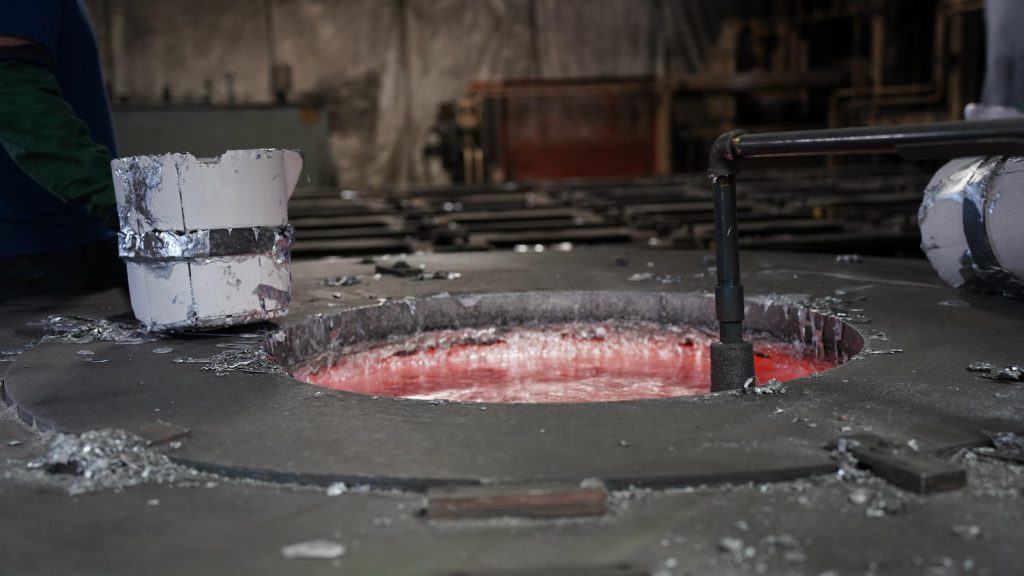
Aluminum Castings Company provides process-controlled sand casting support for marine OEMs that need cored or uncored parts, alloy verification, machining, finishing coordination, and inspection from a domestic foundry.
Request a quote to review your marine casting requirements with the Galesburg manufacturing team.
Your engineered aluminum casting solution starts here.
Call: 309-343-8910 | Email: sales@aluminumcastingscorp.com
Aluminum Castings Company LLC – QMS Certified to ISO 9001:2015 & PED 2014 with TUV Rheinland of North America